
How to Remove Hard Water Stains from Shower Glass in Cleveland Homes
TidyMamas · October 23, 2026
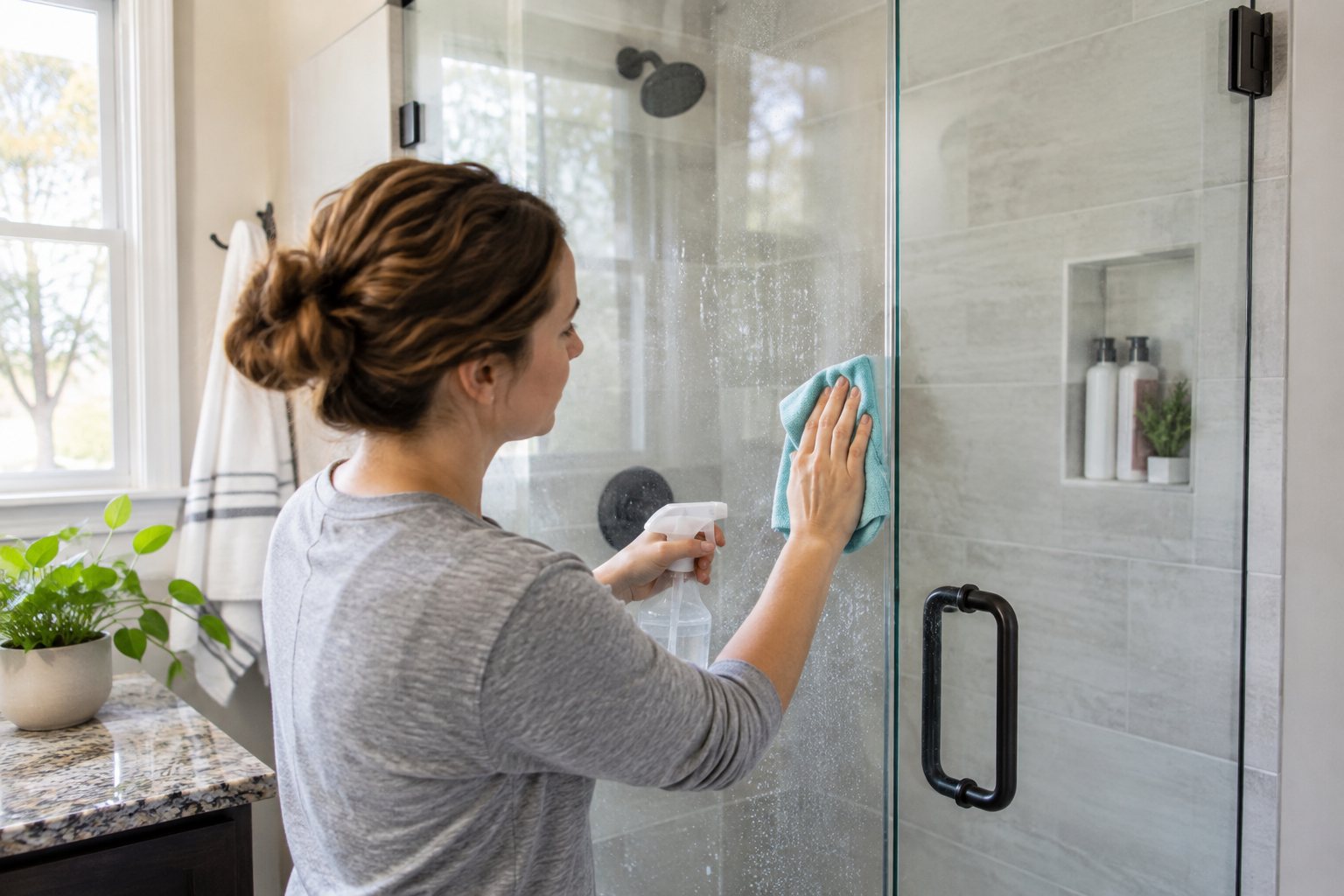
Does your shower look cloudy even after you clean it? The problem may be mineral buildup rather than leftover soap. For Cleveland and Northeast Ohio homeowners, knowing how to remove hard water stains from shower glass can make bathroom cleaning less frustrating—and help prevent damage from overly harsh scrubbing.
Before reaching for a stronger cleaner, check the care instructions for your glass, fixtures and surrounding surfaces. The right method depends on what you’re cleaning.
Is It Hard Water Buildup or Soap Scum?
Hard water deposits often appear as white spots or a chalky film where droplets dry. Soap scum tends to look cloudy or streaky and may feel waxy. Shower doors can have both at once.
Start with a mild cleaning method. Removing everyday soap residue first makes it easier to see whether mineral deposits need separate attention.
If the glass stays cloudy after careful cleaning, it may have permanent etching rather than removable buildup. Repeated scrubbing or stronger products won’t necessarily restore it.
How Do You Clean Cloudy Shower Glass Safely?
Gather a soft microfiber cloth, a non-scratch sponge, a squeegee and a cleaner approved for your shower surfaces.
1. Ventilate the bathroom. Run the exhaust fan or open a window when practical. 2. Remove loose residue. Rinse the glass with lukewarm water. 3. Clean away soap film. Use a small amount of mild dish soap diluted in water, if permitted by the glass manufacturer. Wipe gently, then rinse thoroughly. 4. Treat remaining mineral spots. Choose a hard water stain remover labeled safe for your particular shower glass and nearby finishes. Test a small, inconspicuous area first. 5. Follow the product’s dwell time. Don’t let the cleaner dry on the surface unless its directions specifically allow it. 6. Rinse and dry. Remove cleaner residue, then squeegee and wipe the edges dry.
Avoid steel wool, abrasive powders and scraping tools unless the manufacturer explicitly recommends them.
Can You Use Vinegar on Shower Doors?
Sometimes—but vinegar isn’t safe for every shower.
Its acidity can help loosen mineral deposits on compatible, uncoated glass. However, vinegar can damage marble, limestone and other acid-sensitive materials. Some fixture finishes, grout products and glass coatings also require different care.
If you can’t keep it off vulnerable surfaces, choose a manufacturer-approved alternative. Never mix vinegar with bleach or combine cleaning products. Rinse thoroughly between different cleaners.
How Can You Keep the Spots from Coming Back?
Drying the glass after each shower is the simplest preventive step. Keep a squeegee within reach and wipe water from door edges where it collects.
Use the bathroom exhaust fan to help manage moisture, but remember that ventilation alone won’t remove mineral-containing droplets. A regular gentle cleaning routine also helps prevent soap residue from trapping more buildup.
When Should You Book Bathroom Cleaning?
If shower buildup has become part of a larger bathroom backlog, professional house cleaning can help you get back to a manageable routine.
TidyMamas offers Standard Clean, Deep Clean and Move In / Move Out cleaning. Describe the shower’s condition and surface materials when booking so you can confirm which option fits and whether mineral buildup treatment is included. Permanent etching or damaged finishes may need a specialist rather than additional cleaning.
Ready for help with your Cleveland-area home? Book with TidyMamas at /booking.